Native History
The Red River Gorge has been home to Indigenous peoples for thousands of years and features numerous natural arches and rock shelters, some of which contain ancient petroglyphs and artifacts. These natural shelters preserved tools, pottery, woven materials, and plant remains that offer insight into what daily life may have been like. Because of this cultural richness, parts of the Red are recognized as a National Archaeological District and listed on the National Register of Historic Places. These sites remind us that the Gorge is not only a climbing destination, but also a deeply significant cultural landscape with a long human history.
Geology and Biodiversity of the Red River Gorge
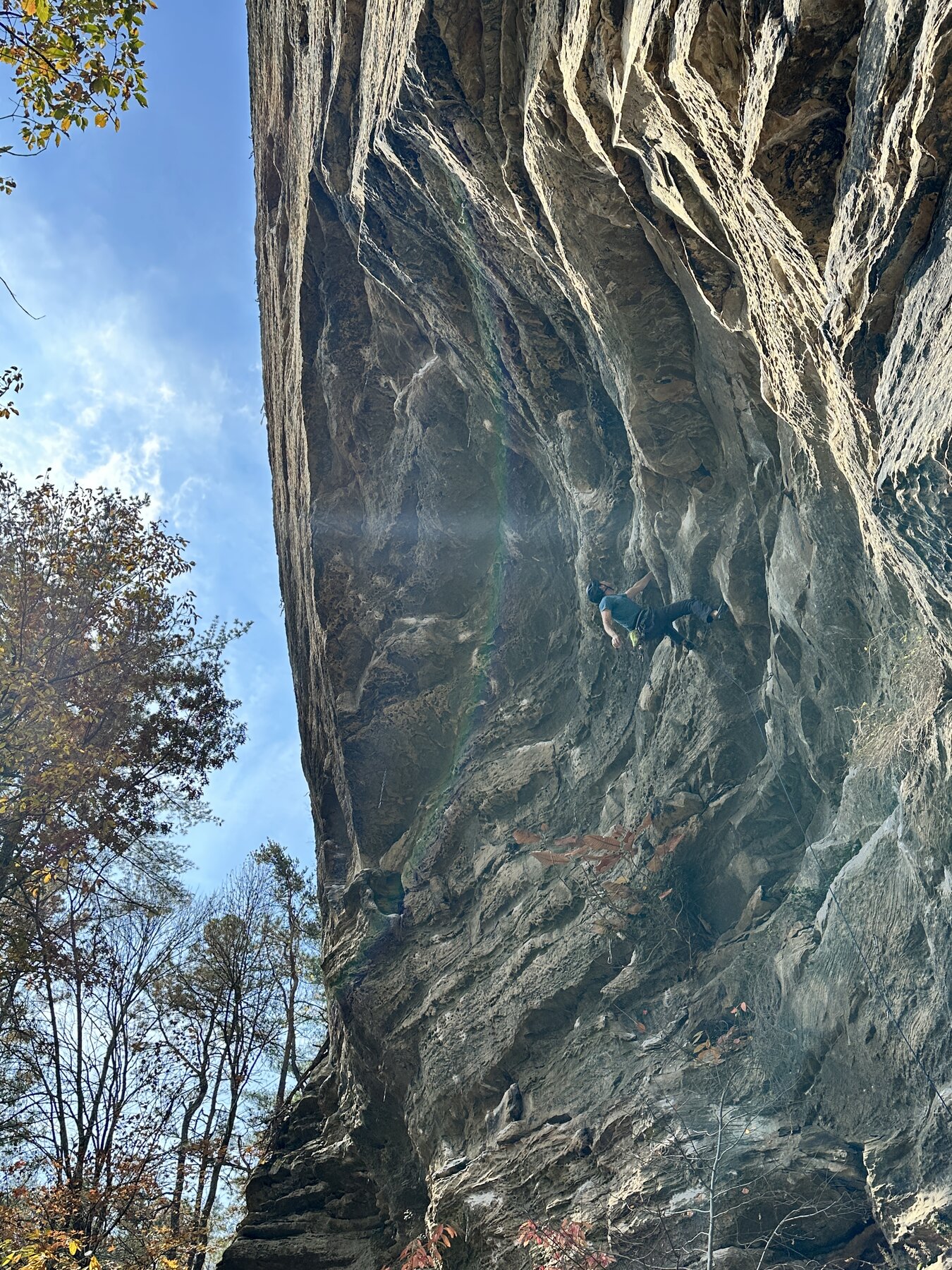
Geologically, the Red River Gorge is a testament to the power of natural forces. The sandstone cliffs, which are the main draw for climbers, were formed over a long period of time through processes of sedimentation and erosion. This has created a diverse landscape with a wide range of climbing environments, from overhanging cliffs to extensive crack systems and even some technically challenging slab climbs.
Ecologically, the Gorge is home to a variety of plant and animal species, some of which are rare or endangered. This biodiversity adds to the unique charm of the area and highlights the importance of conservation efforts. By understanding the natural and cultural significance of the Red River Gorge, climbers can appreciate not just the activity itself but also the profound beauty and history embedded in the area.
Want to learn how you can help protect this landscape? Visit our Climb Responsibly page for Leave No Trace principles and access guidelines.