When to Visit
The Red River Gorge is truly climbable year-round, but the best season is late fall/early winter, when temperatures are moderate and the weather is generally stable. Early to mid spring is also a favorable time of year, though rain is generally more frequent. Summer is usually hot and humid, and along with the influx of flying insects, summer climbing in the Red is quite challenging. Winter can be damp with cold temperatures, although many south-facing cliffs remain climbable even through the winter season — sunny crags can actually provide ideal climbing conditions in winter, even with temperatures as low as the 30s, depending on your tolerance level. Snow is occasional and often only a few inches. Plus, the crowds are gone and only the true locals remain.
Weather & Conditions
Always check the weather forecast before your trip, though it should be noted that the forecast is not always reliable. Due to the wandering cliff lines that make up the Red River Gorge region, storm systems can be hindered from traveling the expanse of the RRG and little pop-up showers can occur. It’s not uncommon to have pouring rain in the PMRP region but little to no rain in the Muir Valley region.
Although the weather can be difficult to predict here, thunderstorms typically pass through in 30–45 minutes and activities can continue. Due to the makeup of our sandstone, you can actually climb the rock even if wet — though it can be more slick, and the use of chalk isn’t recommended during super wet conditions because it turns into a pasty mess.
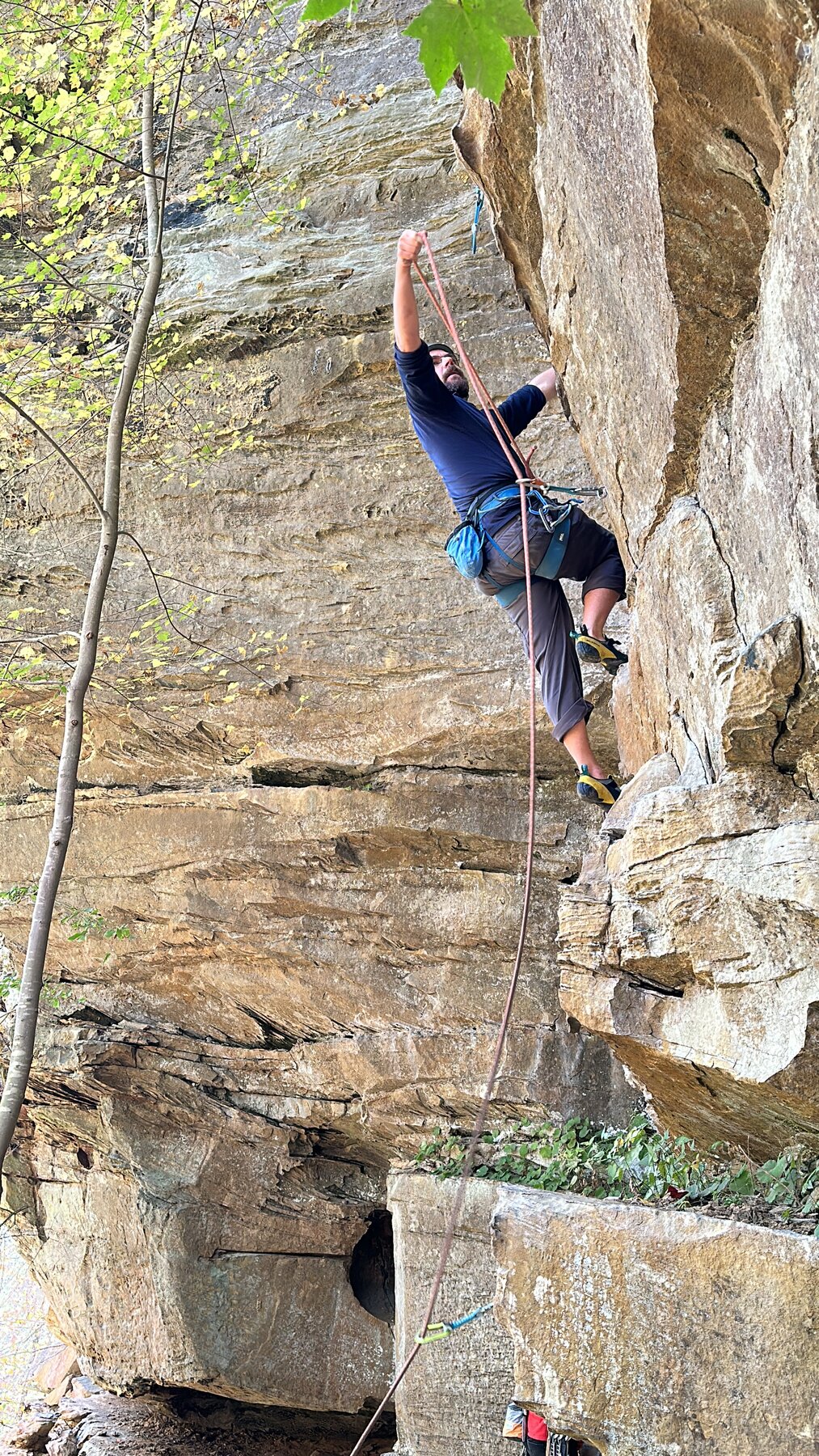
Also unique to the Red are the steep, overhanging rock features that can provide shelter and continued climbing in light rain. Even though steep terrain can provide some incredible rainy day climbing options, it should be noted that heavy rain for a long period can cause the rock to seep. Climbing during heavy storms is never a good idea — seek shelter in a vehicle or structure, and never go out climbing or continue climbing in severe weather.
One last important note about the Red River Gorge climbing climate is that humidity can be a challenge. A helpful metric to look at is the dew point. Even though certain overhanging crags are protected from direct rainfall, moisture in the air can condensate on the rock and cause it to “sweat” if the temperature falls below the predicted dew point. This usually happens overnight and mostly in the summer — the rock may be relatively dry one evening, then quite damp the very next morning. A later start may be needed to allow the rock more time to dry out.
A unique and useful weather tool maintained by a long-time local climber is the Sendex report. This compiles local weather data to create a numerical output — the closer the Sendex is to 100, the better the climbing conditions.
What to Bring
Packing the right gear is essential for a safe and enjoyable climbing day in the Red River Gorge.
At a minimum, you’ll want:
- Climbing shoes
- Harness
- Helmet
- Chalk bag
- Belay device
- Rope
Depending on your objectives, you may also need:
- Quickdraws (for sport climbing)
- A full rack of protection (for trad climbing)
Don’t forget the essentials such as plenty of water, snacks, a small first aid kit, a guidebook or climbing app, and clothing appropriate for the weather.
Local Gear Tips for the Red
The Red River Gorge has its own quirks. These extra pieces of gear can go a long way in making your day smoother, safer, and more enjoyable.
Rope Bag or Tarp
While rope bags are common these days, they’re especially important here. The base of most cliffs is covered in fine, dusty sand — despite the fact that you’re climbing on sandstone. Keeping your rope off the ground helps extend its lifespan and protects your hardware (like quickdraws and belay devices) from unnecessary wear caused by gritty ropes.
Belay Glasses
If you plan on belaying on steep or overhanging routes, belay glasses can be a game changer. These prism-style glasses allow you to look forward comfortably while still keeping your climber in view, saving your neck during long belays. Affordable options are widely available and worth considering if you’ll be spending time at the crag.
Stick Clip
A must-have for sport climbing in the Red. Many routes have high first bolts and challenging starts, making it common practice to stick clip the first bolt (and sometimes the second). We recommend a pole that extends at least 12 feet, though longer setups aren’t uncommon.
Chalk Brush
Our classic routes see a lot of traffic, and over time, chalk can build up and leave holds visibly white. As part of good climbing etiquette, consider brushing holds when you’re resting or lowering — a small effort goes a long way in preserving the natural look of the rock for everyone.
Personal Anchor System (PAS)
Most anchors in the Red consist of two bolts with chains, often ending in a rap ring or quick link. Many routes are also overhanging, which can make cleaning anchors more complex. A two-point tether system allows you to securely clip into both bolts while still reaching the anchor, making the process safer and more efficient. If you’re not experienced with cleaning anchors, we strongly recommend hiring a professional guide or instructor.
Trad Rack Recommendations
A standard rack will cover many routes, but the Red’s varied crack systems often require multiple pieces of the same size. We recommend:
- Double rack from .3 to #3
- One #4 cam
Larger sizes (#5, #6) are only needed for specific routes and are typically planned in advance. Additionally, bring 8–12 alpine draws — many routes wander and feature bulges, so extending placements helps reduce rope drag and keeps your gear running cleanly.
What to Leave at Home
While some of the items below may be allowed in certain areas, we recommend leaving them at home when climbing in the Red River Gorge to help protect the environment and maintain a safe, enjoyable experience for everyone.
Young Children & Pets
Crag environments can be unpredictable — rockfall, loose branches, and other natural hazards are more common than many expect. Because of this, the base of climbs may not always be a safe or comfortable environment for young children or pets. If you do bring dogs, they should always be leashed and under control. Helmets are strongly recommended for anyone spending time at the base of cliffs.
Hammocks
Hammocks can contribute to erosion and vegetation damage, especially in already impacted areas with limited space. Many climbing areas also have specific restrictions on their use.
Speakers
As the Gorge becomes more popular, being mindful of shared space is increasingly important. Speakers can interfere with communication between climbers and detract from others’ experience outdoors. Keeping noise levels low helps everyone stay safe and enjoy their time outside.
Environmental Considerations
Be aware of natural hazards commonly found in the area, including:
- Copperheads & other venomous snakes
- Ground bees
- Poison ivy and poison oak
Staying aware of your surroundings is an important part of having a safe day at the crag.
Area-Specific Restrictions
No pets or hammocks: Muir Valley, Graining Fork Nature Preserve, Torrent Falls
No hammocks: Pendergrass-Murray Recreational Preserve, Miller Fork Recreational Preserve, Bald Rock Recreational Preserve, Cathedral Domain
Pets are allowed on properties managed by the Red River Gorge Climbers Coalition (PMRP, MFRP, BRRP), but must be leashed at all times.
Local Resources
Climbing Guides
If you’re new to the area or looking to improve your skills, hiring a local guide can be incredibly beneficial. Professional guides offer personalized instruction, local knowledge, and safety tips. They can help you navigate the best routes, understand the unique geology of the Gorge, and provide support for both beginner and advanced climbers.
- Southeast Mountain Guides — southeastmountainguides.com — 606-668-6613
- Bluegrass Climbing School — bluegrassclimbingschool.com — (859) 740-2403
- Red River Climbing Guides — redriverclimbingguides.com — (629) 207-0697
Gear Shops & Rentals
Miguel’s Climb Shop in Slade, KY is the climbing gear shop in the area. You can find the parking/entrance right next to the parking/entrance for Miguel’s Pizza. Miguel’s offers a range of products from climbing shoes and harnesses to ropes, carabiners, cams, and even clothes. If you’re looking to rent gear, you can contact Southeast Mountain Guides, which rents climbing shoes, harnesses, helmets, and stick clips for a low daily fee.
- Miguel’s Rock Climbing Shop — miguelsrockclimbingshop.com — 606-663-3650
- Southeast Mountain Guides — southeastmountainguides.com — 606-668-6613
Safety Tips & Emergency Services
Safety should always be your top priority when climbing in the Red River Gorge. Taking a little time to prepare can make a big difference in your overall experience.
Before heading out, familiarize yourself with the routes and area you plan to visit. If you’re unsure about anything, don’t hesitate to seek advice from local climbers or hire a professional guide.
At the crag:
- Double-check your gear before every climb
- Use proper belay and anchor cleaning techniques
- Communicate clearly with your climbing partner
- Follow local climbing ethics and area guidelines
Limited Cell Service
Many areas in the Gorge have little to no cell service, so it’s important to plan ahead.
- Let someone know your plans before you head out
- Consider bringing a backup form of communication (such as a radio or emergency device)
- Be aware that some areas, like Muir Valley, have two-way radio stations available for emergencies
Knowing your location and having a plan in place can be critical if something goes wrong.
Emergency Contacts
911
- Wolfe County Dispatch (Muir Valley, Torrent Falls, Graining Fork, and parts of the DBNF): 606-668-6757
- Lee County Dispatch (PMRP, BRRP, and MFRP): 606-464-4140
- Menifee County Dispatch (much of the DBNF): 606-768-3482
You can also support the following local Search and Rescue teams:
- Wolfe County Search and Rescue — wcsart.com | Facebook
- Powell County Search and Rescue — pocosar.org | Facebook
- Red Star — redstarmedical.org
Nearby Hospitals
Note: approximate distances are from Slade, KY.
- Kentucky River Medical Center – Jackson, KY (30 minutes): 606-666-6000
- Marcum & Wallace Memorial Hospital – Irvine, KY (40 minutes): 606-723-2115
- Clark County Regional Medical Center – Winchester, KY (40 minutes): 859-745-3500
- University of Kentucky Hospital – Lexington, KY (60 minutes): 859-323-5000
- St. Joseph Hospital – Lexington, KY (60 minutes): 859-268-4800
Possible Helicopter Landing Zones
- Dessie Scott Children’s Home – Pine Ridge, KY (10 minutes): 606-668-6297
- Cliffview Resort – Rogers, KY (10 minutes): 888-560-0525 or 606-668-6534
Veterinary Services
- Moore Veterinary Services — 1043 Grand Ave, Beattyville, KY 41311 — 606-464-1155 — Facebook
- Bluegrass Veterinary Services (Open 24 Hours) — 1591 Winchester Rd #106, Lexington, KY 40505 — 859-268-7604 — bgvets.com